When the Finish Line Feels Too Far Away
Teach your child to take the next step. Not every step. Not the whole staircase. Just the next one.
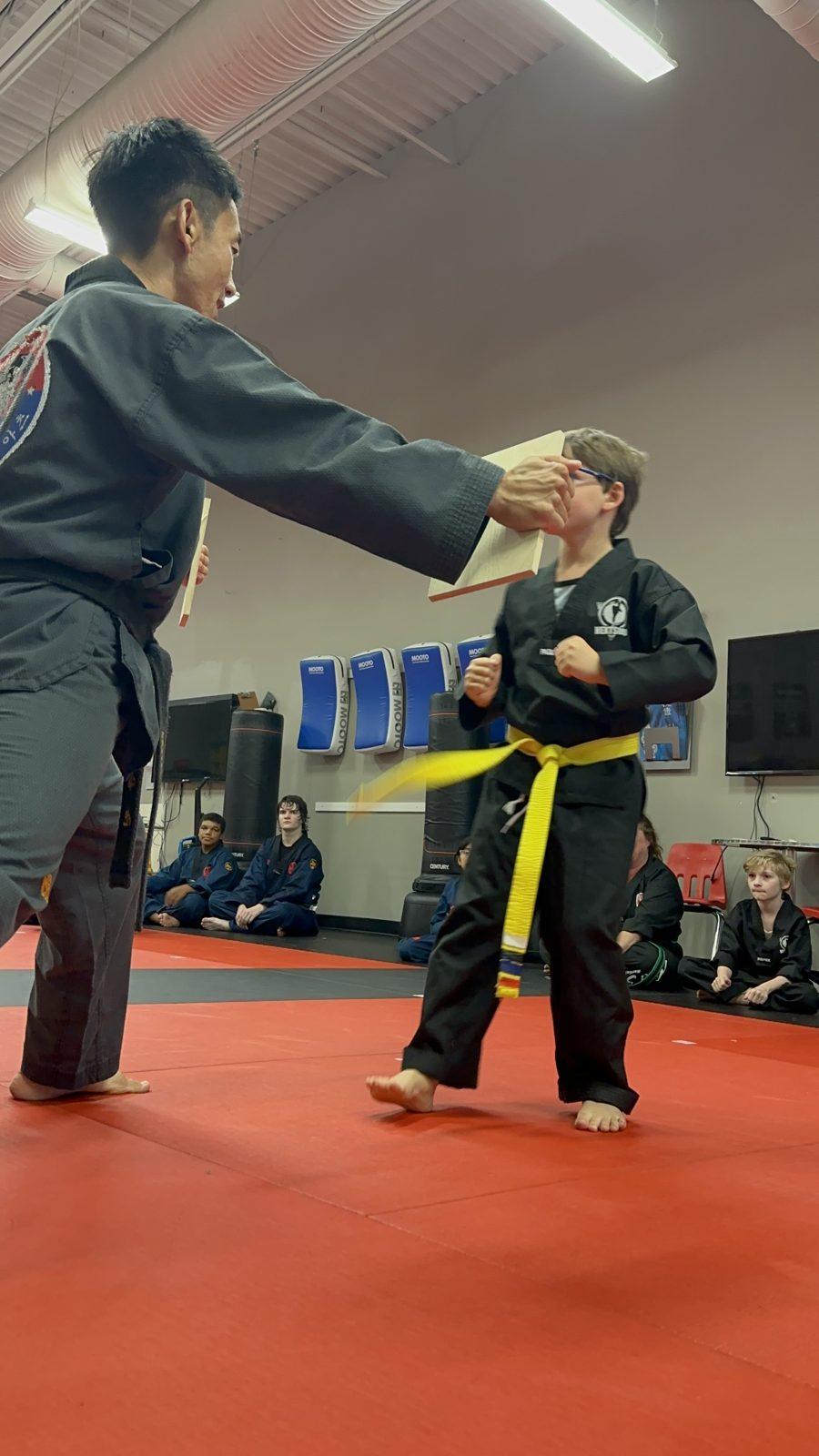
This sounds simple, right? But when a child is struggling with a new movement, a difficult belt rank, a school assignment, or a friendship problem, the finish line can feel very far away. They look at everything they still have to do, and suddenly the work feels impossible.
That is one reason we named our school NEXTStep Martial Arts. The idea is simple: you are taking the next step in your life, and we are here to help you take it. Sometimes the next step is a strong roundhouse kick. Sometimes it is listening carefully. Sometimes it is trying again after a mistake.
That's what I'm trying to do with every student in our dojang. Give them a way to keep moving.
Small Progress Is Still Progress
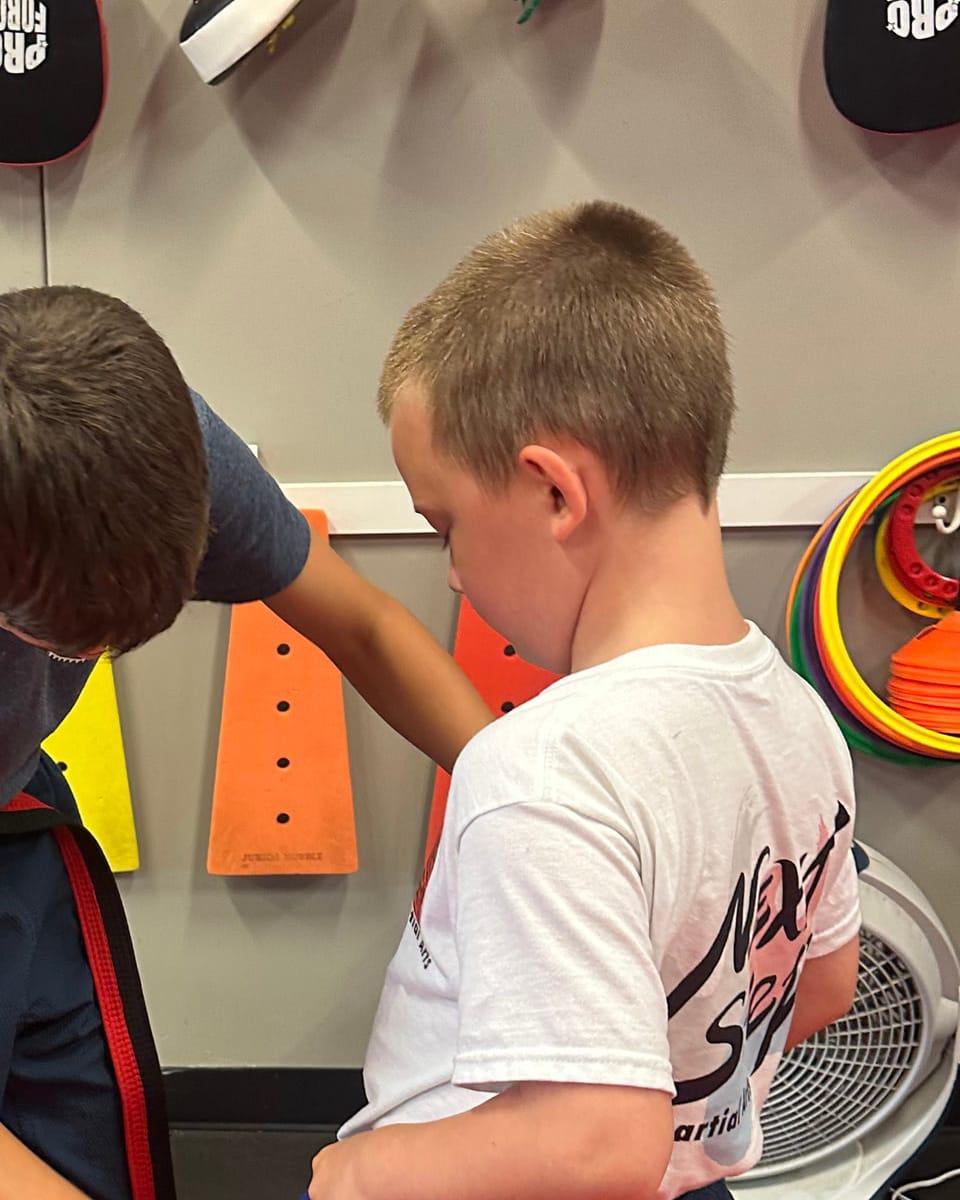
Parents often see a child's big goal before the child can see it. You may be thinking about the next belt rank, the next school year, or the confidence you hope your child will build. Your child may only be thinking, “I do not know how to do this.”
So make the goal smaller.
- Stand in the correct position.
- Practice one part of the movement.
- Listen for one instruction.
- Try one more time.
One more time. That is often where the learning begins.
A student does not need to make a giant leap from beginner to expert. In my experience, the students who keep taking small steps are the ones who go the farthest. They may not always be the most naturally athletic. They may not learn every movement first. That is okay.
Talent can help a student move quickly at the beginning, but talent is not the same as perseverance. The child who keeps working, keeps listening, and keeps returning to the challenge is building something much stronger.
Do Not Let Comparison Choose the Story
Every class has students who learn certain techniques quickly. One child may kick high right away. Another may remember poomsae after seeing it only a few times. Your child may notice this and think, “He or she is better than me.”
I want you to remind them: “Watch carefully. What are they doing well? What can you learn from them?”
That is different from sitting in frustration and saying, “I am not good.” If another student performs something well, applaud. Then study the movement. Try the part you can try. Adapt what makes sense for you. Keep going.
There may be a little jealousy. That is normal. We do not need to pretend every feeling is perfect. But your child can learn what to do next with that feeling. They can turn comparison into information instead of using it as a reason to quit.
What do you think? Which response will help your child more: “I will never be that good,” or “What can I learn from that?”
A Lesson I Learned on the Road
I learned this lesson during my first full marathon. I made some poor choices before the race, including eating too much heavy food at a hotel buffet. Soon after the race started, my body began giving me problems. I was dehydrated, cramping, and still had many miles to go.
At one point, I could not see the finish line. It was too far away. When I looked at the entire distance, I felt discouraged. What could I do?
I stopped thinking about the finish line. Instead, I looked for the next traffic light. My goal became reaching that light. Then I would reassess. After that, I chose the next one.
One step. Then another step.
I started giving meaning to each step by thinking about people I loved: my children, my wife, my family, and students. That helped me continue when my body and my mind both wanted to stop.
Of course, there were funny moments too. I saw a runner wearing a shirt that said, “I only have one leg, but I'm running faster than you.” It felt like a slap in the face—in a good way. I was making excuses while someone else was showing extraordinary determination.
The lesson was not that we should ignore pain or make unsafe choices. The lesson was that a huge goal can become manageable when we focus on the next clear step.
What Parents Can Say at Home
When your child is overwhelmed, try not to give them the entire speech about the future. They probably cannot use it in that moment. Start with a question or one small instruction.
- “What is the next part you can do?”
- “Can you try it once more?”
- “What did you learn from that attempt?”
- “Would you like help choosing the next step?”
These questions bring the challenge back into reach. They also return responsibility to your child. You are supporting them, but you are not carrying the whole challenge for them.
Sometimes a child needs a short break. Sometimes they need water, rest, or a calmer explanation. Taking the next step does not mean forcing through everything without thinking. It means finding the next healthy action and then going from there.
Perseverance Does Not Need to Be Loud
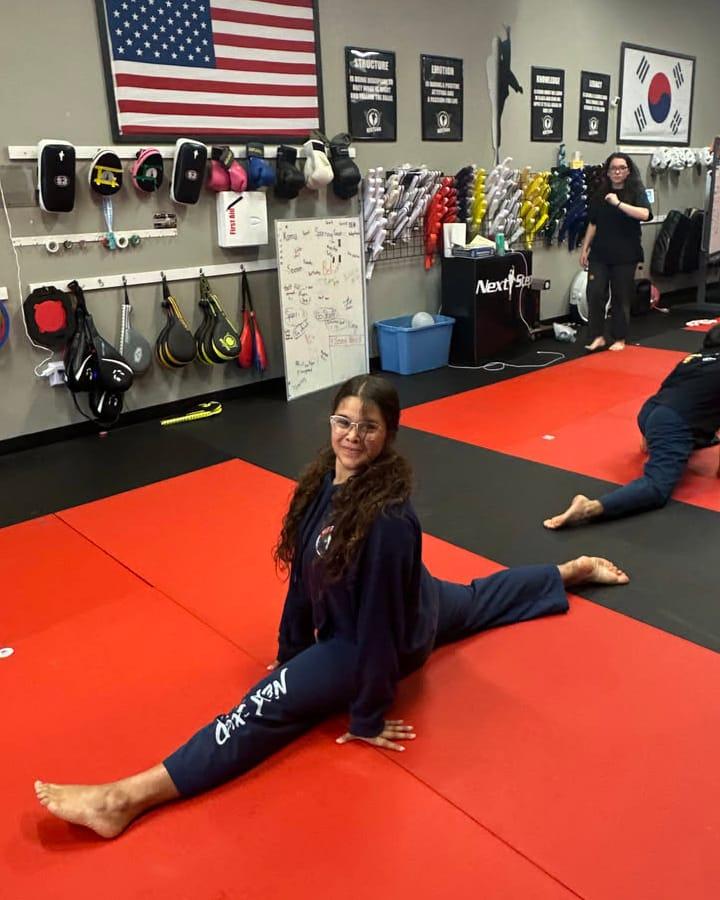
Perseverance is not always dramatic. It may look like a child quietly putting on their dobok and coming to class after a hard day. It may look like raising a hand to ask a question. It may look like practicing a movement that did not work yesterday.
Nobody else may notice that small move. That's fine. Your child is not doing it for other people. They are doing it for themselves.
Over time, the small steps begin to add up. One day, your child looks back and says, “Wow. How did I get here?” There you go. That is the change we want them to experience—not only a better technique, but a stronger belief that they can continue when life becomes difficult.
In Tiny Tigers, Junior Warriors, Teen & Adult, and the CIT program, we all practice this lesson in different ways. The movement may change, but the idea stays the same: keep the fire going, take the next step, and do not let the distance scare you.
Parents, the next time your child says, “I cannot do it,” do not argue about the whole finish line. Ask them what one step they can take now.
Nice and easy. One step, then the next. You can do it. Let's go!
See It In Action
Everything we write about, we practice daily. Come see the difference in person with a free intro class.
Schedule Your Free Intro ClassNo obligation, just opportunity
