What Does Your Child Say to Themselves?
Here is a question worth thinking about. When your child looks in the mirror, or when a technique does not work, what do they say to themselves?
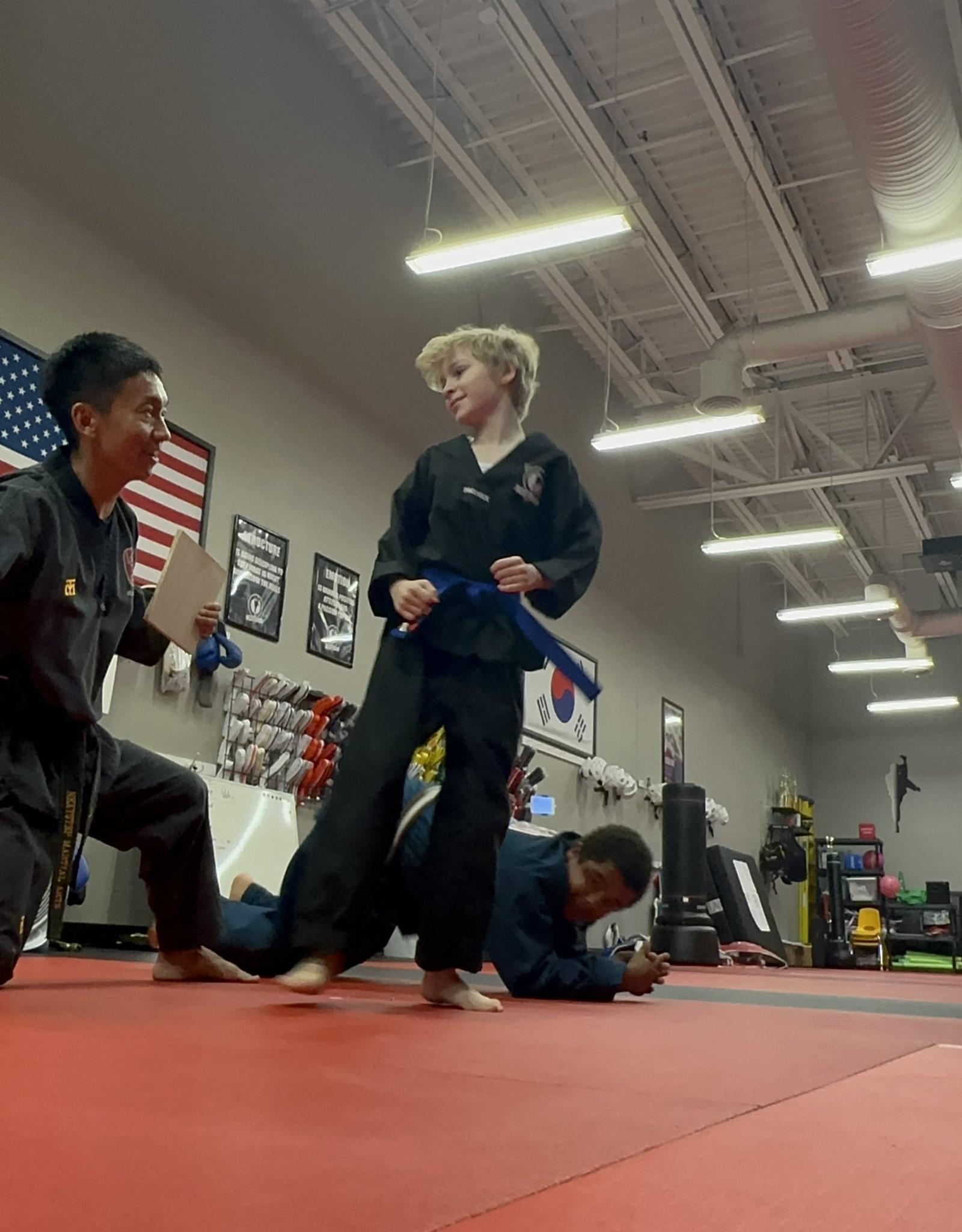
Some kids go right to, “I’m terrible at this.” Some get frustrated and quit. And some can look at the work honestly and say, “I’m still learning. I can try again.”
That difference matters. A lot.
At the end of the day, Taekwondo is not only about the belt, the higher kick, or remembering every step of a poomsae. Those things matter, right? They are the work. But the deeper goal is helping a child become someone they can respect when they look in the mirror.
That is what martial arts gave me. Not just the ability to kick or defend myself, but confidence and a better relationship with myself. That is what I want for our students.
Feeling Safe Comes Before Learning
When I first came to the United States, I could not speak English well. The people who helped me most did not teach me English or give me some complicated lesson. They said hello. They asked my name. They helped me feel comfortable and safe.
And because I felt safe, I could learn.
Children work the same way. Before a student can focus on a new kick, a turning motion, or a difficult combination, they need to know they belong in the dojang. They need to know mistakes are part of practice, and that someone will help them instead of embarrassing them.
The small actions do that work. Saying hi to a new student. Making room for someone who looks nervous. Showing a child where to stand. Giving them time to try again. These things look simple from the outside, but they add up to something much bigger.
Small Wins Are Real Wins
Parents naturally watch for the big moments: the new belt, the tournament medal, the kick that suddenly looks higher. Those moments are exciting, and your child should be proud of them. But do not miss the smaller victories:
- They came into class even though they felt nervous.
- They remembered one part of a technique they had been forgetting.
- They controlled a movement instead of rushing through it.
- They encouraged a partner.
- They kept going after making a mistake.
- They listened, adjusted, and tried again.
Those are wins. Take them.
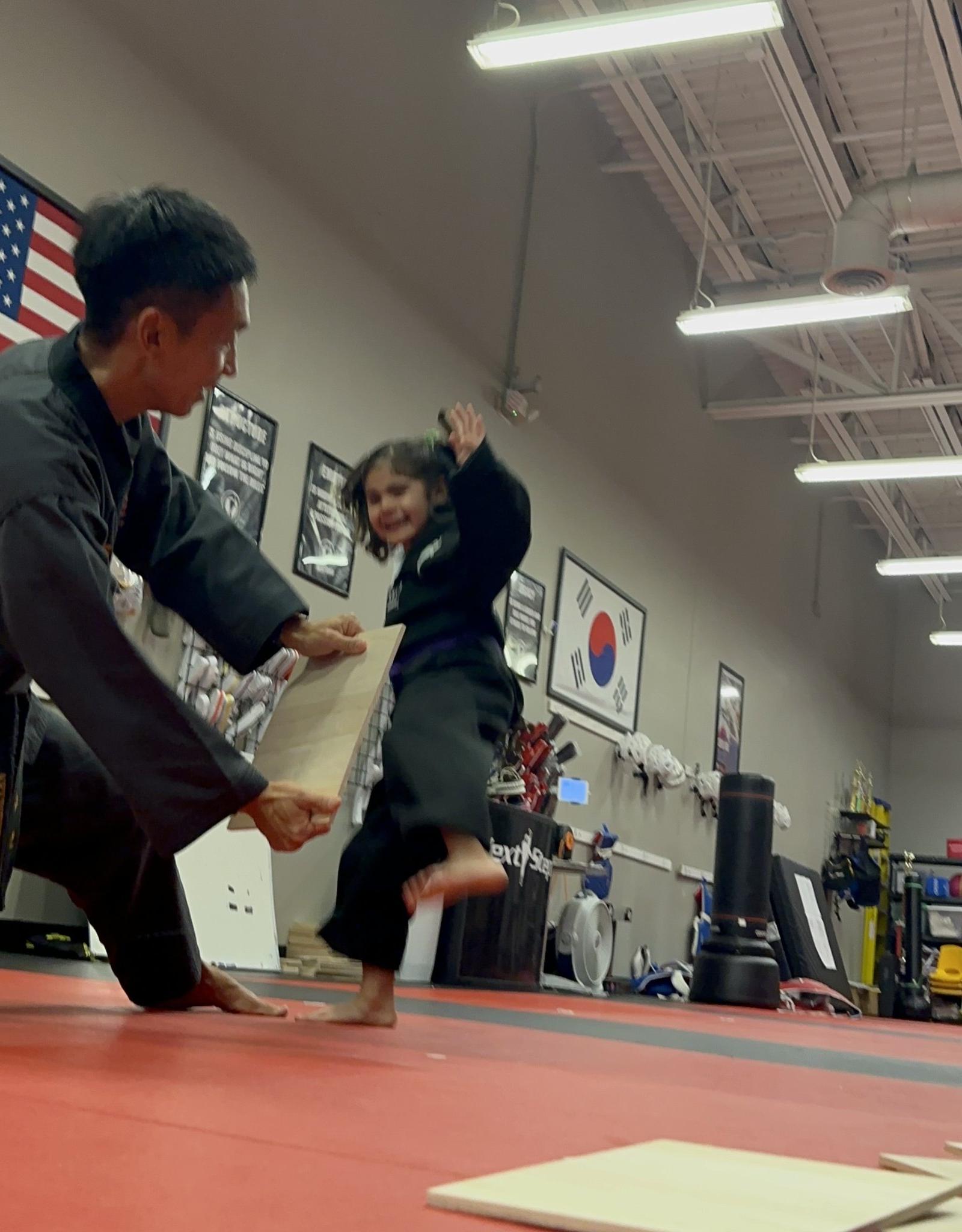
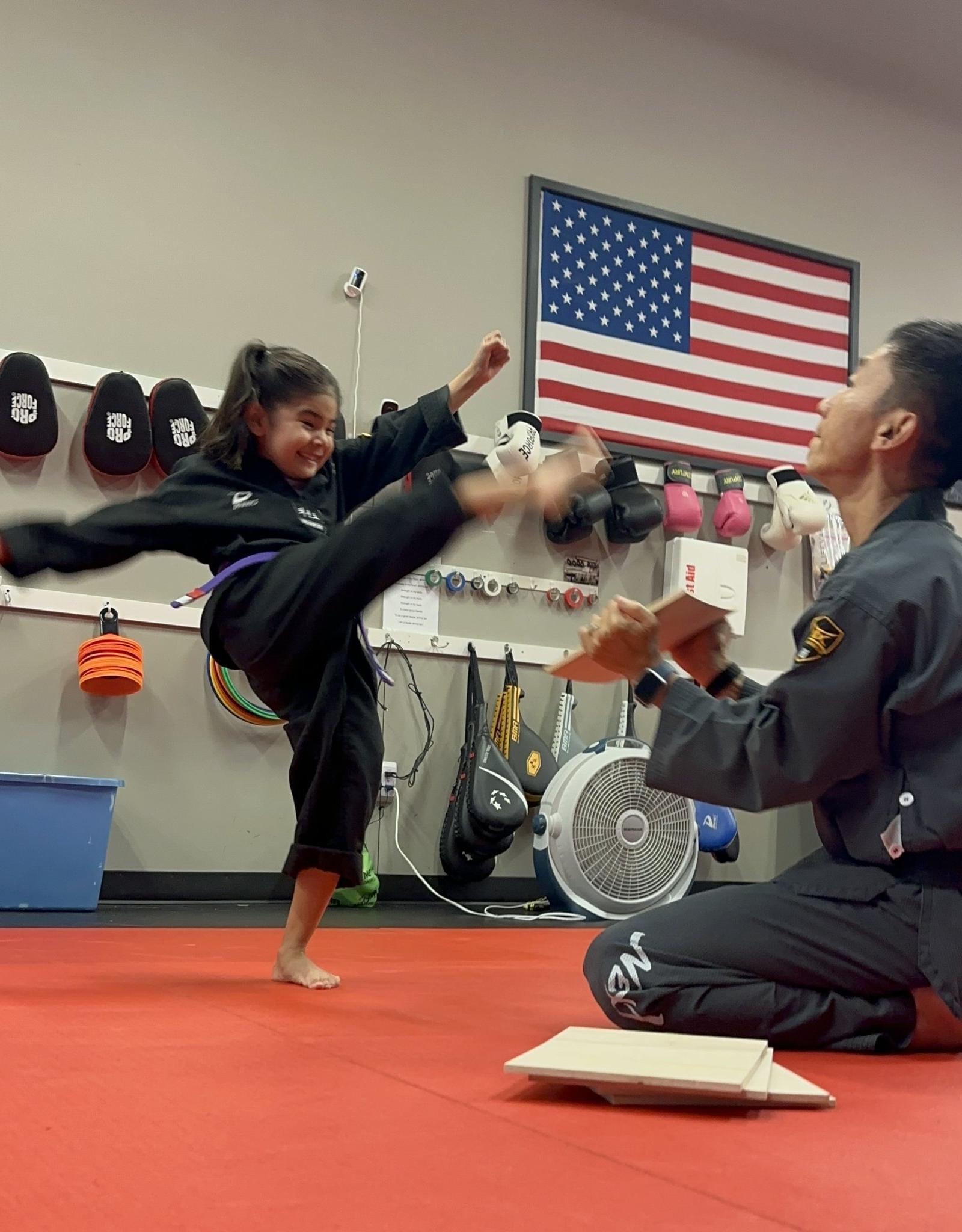
In class this week, students worked through turning, switching legs, and kicking combinations. The goal was not speed. In fact, moving too fast made the technique choppy. Students had to slow down, connect the movement, control the turn, and bring the leg up with purpose.
That can be frustrating. A child thinks, “I should already be able to do this.” But learning to slow down is part of learning. Control is not failure. Control is progress. You know what I mean?
Confidence Is Built in the Conversation
When your child struggles, you do not have to pretend everything is perfect. You also do not need to give a long speech.
Try asking, “What part feels difficult?” Then listen.
Maybe they do not understand where the foot should land. Maybe they are worried about looking different from everyone else. Maybe they are tired, or their body simply has not learned the movement yet. Once the problem is clear, it becomes something they can work on. That is very different from hearing, “You need to try harder.”
That is what we practice in the dojang: notice the problem, then ask, “How do I fix it?” Then we figure it out together. A child who learns to ask a useful question when something is hard is building a skill for school, for home, and for the rest of their life.
Do Not Turn Practice Into Pressure
Here is something parents of an excited kid sometimes overlook: keeping the fire going without burning it out.
If your child loves Taekwondo, it is tempting to bring them every possible day. They are excited, so you want to give them more. But more is not always better.
Training needs room to stay enjoyable. A clear, manageable commitment, with extra days as an addition when they fit, gives your child consistency without turning every week into a test they must pass.
Think about a show you love. Watch it nonstop, and even a favorite starts to feel tiring. Training is similar. Children need repetition to improve, but they also need space to recover, enjoy other activities, and look forward to coming back.
When training becomes pressure, a child can start to connect Taekwondo with guilt. We want the opposite: a child who is proud that they tried, proud that they learned, and proud that they kept a promise to themselves.
What Parents Can Say This Week
After class, instead of asking only, “Did you get your next belt?” try one of these:
- “What was one small win today?”
- “What did you learn about your body?”
- “What part became easier after you practiced it?”
- “Did you help anyone or did anyone help you?”
- “What are you proud of?”
Questions like these point your child toward the process. They help a kid notice effort, control, courage, and kindness. They also remind them that their value is not decided by one performance.
A belt is a meaningful marker, but it is not the whole story. A student may train for a short time and still gain something important: more comfort speaking up, more willingness to try, better body awareness, and the confidence to stand in front of a group.
That is success too.
Look in the Mirror
So here is the challenge. The next time your child has a difficult class, help them see the full picture. Did they show up? Did they listen? Did they make an honest effort? Did they treat their partner with respect? Did they try again?
Then ask them to notice how they speak to themselves.
What I want for our kids is simple: when they look in the mirror, they feel proud. Not because they were perfect. Not because they earned a label faster than someone else. Because they can see the person they are becoming.
Keep the commitment manageable. Celebrate the small wins. Let the instructors help with the roadblocks. And give your child room to build a relationship with training that can last.
Start this week. Ask one small question after class, and take the small wins. That's what it is.
See It In Action
Everything we write about, we practice daily. Come see the difference in person with a free intro class.
Schedule Your Free Intro ClassNo obligation, just opportunity
