What Is Your Child Saying to Themself?
There is a question I ask our students that has nothing to do with kicking higher or earning the next belt.
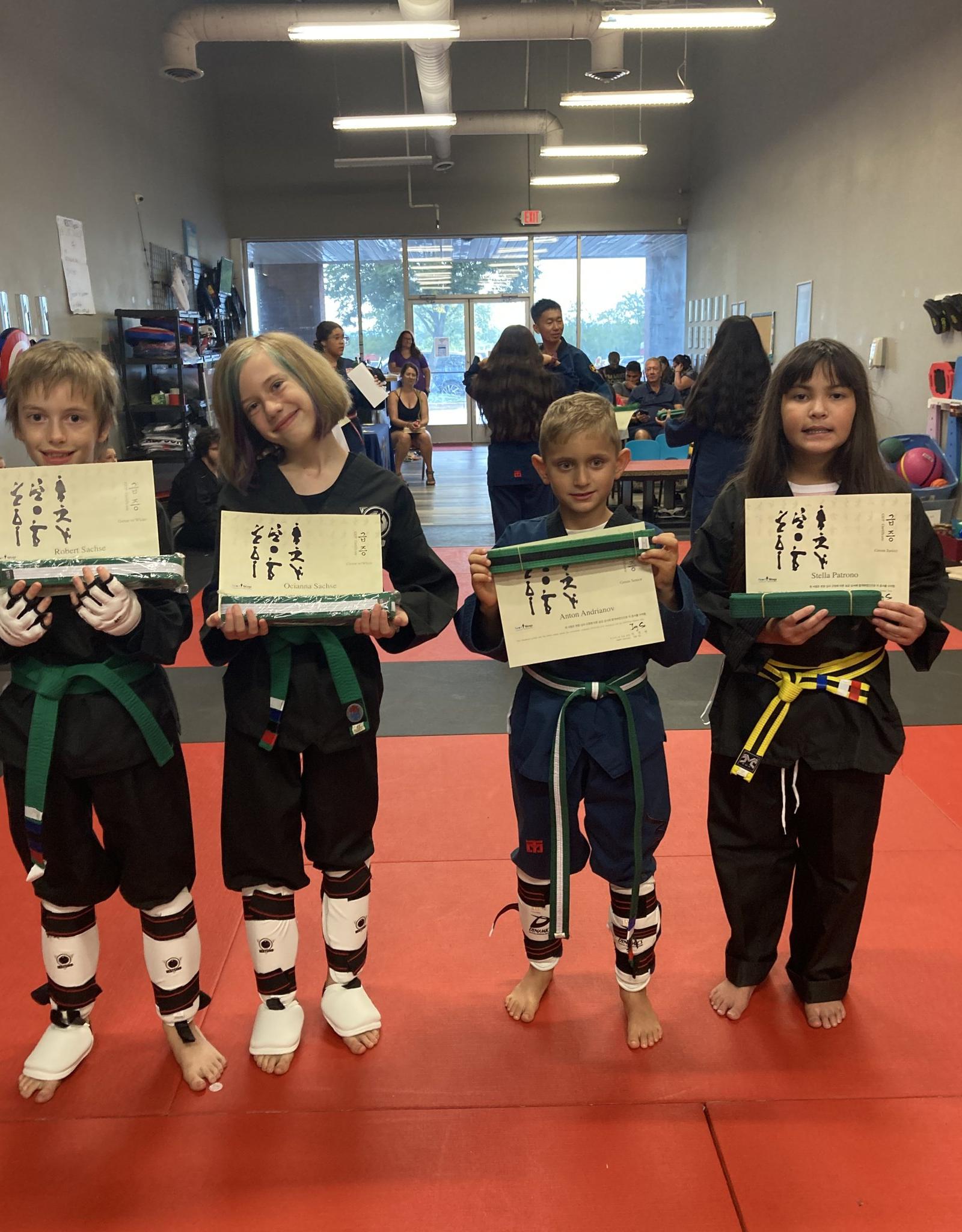
What gives you pride?
Some students say, “I’m an athlete,” or “I’m a blocker,” or “I’m a receiver.” Fair enough. Those are things they do. But I want them to reach for something deeper: pride in how they carry themself, how they treat people, and how they respond when a movement does not cooperate.
Because the most important opinion your child hears all day is usually the one inside their own head. When they look in the mirror, what do they say? Do they see somebody who is still learning, or somebody who is not good enough?
That difference shapes everything. Right?
Taekwondo Gives Children Proof They Can Improve
A child does not become confident just because an adult says, “Be confident.” Confidence grows when they try something, struggle with it, make an adjustment, and do it better. They need proof.
This week we worked on front kicks, roundhouse kicks, and side kicks. The lesson was not simply, “How high can you kick?” It was knee control, ankle control, balance, and returning to a strong position.
That sounds like a small detail. It is not.
A student lifts the knee too low, bends the ankle, or lets the knee drop before the kick finishes. So we slow down and fix one piece at a time. Bring the knee up. Hold it in position. Point the toes. Snap the technique and come back.
Then the student feels it: the movement becoming more precise under their own control.
That is a real win. Not because the kick looked impressive from across the room, but because the student just learned something they can use forever: “I can notice what needs fixing, and I can fix it.”
Higher Is Not Always Better
Parents naturally notice the big things. A higher kick looks exciting. A new belt is easy to celebrate. Enjoy those moments. We do too.
But a higher kick without control is not the goal. If the knee escapes, if the ankle bends, or if the student has to throw the whole body off balance to reach the target, the movement still needs work. A powerful-looking result can hide a weak foundation.
So we keep bringing students back to the quiet part: What are the knee and ankle doing? Can the body stay under control? The impressive result comes after the repetitive work nobody claps for.
You do not prepare for a great moment by waiting for the great moment. You practice the small details over and over, until they belong to you. That is how you keep the fire going, little by little.
Small Corrections Build a Strong Inner Voice
When a child gets corrected, their first instinct is often to hear criticism: “I did it wrong. I’m not good at this.” We teach a different response.
A correction is information.
It tells you where to place your foot. It shows you how to protect your balance. It gives you a better way to finish the technique. It is not a judgment on who you are. That is what it is.
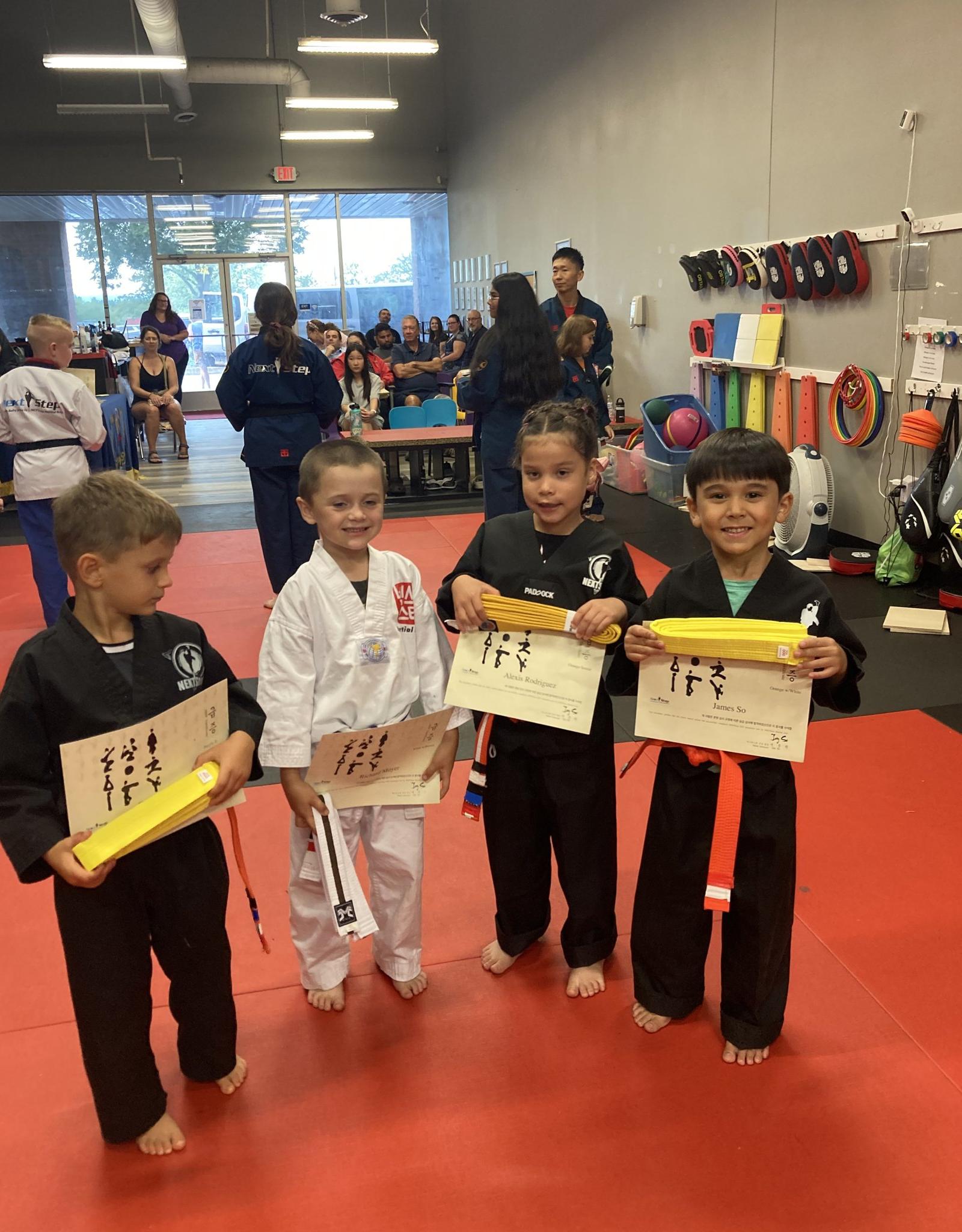
That is why we celebrate the adjustment itself. A student who fixes the ankle after one reminder is showing discipline. A student who lowers the body to regain control is showing awareness. A student who tries again after losing balance is building courage.
From the outside, these moments look ordinary. Inside the child, something important is happening: “I can’t” is being replaced with “I know what to try next.”
How Parents Can Reinforce This at Home
You do not need to run a technical debrief in the car. Too much instruction at home can turn training into one more assignment. Instead, ask questions that help your child notice their own progress:
- What did you improve today?
- What correction helped you?
- What was difficult, and what did you try?
- What are you proud of?
Then listen for more than the outcome. If your child says, “I kicked higher,” celebrate that. But also celebrate “I kept my knee up,” “I fixed my foot,” and “I tried again.” Those are the habits that hold up when life gets difficult.
And go easy on comparisons. Your child does not need to be the fastest, strongest, or most flexible kid in the room to be making progress. Their job is to become more capable than they were before. How about that?
Pride Is Not the Same as Perfection
When I tell students to be proud of themselves, I am not asking them to pretend everything is perfect. Pride does not mean ignoring mistakes. It means looking honestly at the work and still respecting the person doing it.
Your child will have a class where the kick just does not come together. They will forget a sequence, lose focus, or feel frustrated. None of that erases their progress. It gives them one more chance to practice responding with patience.
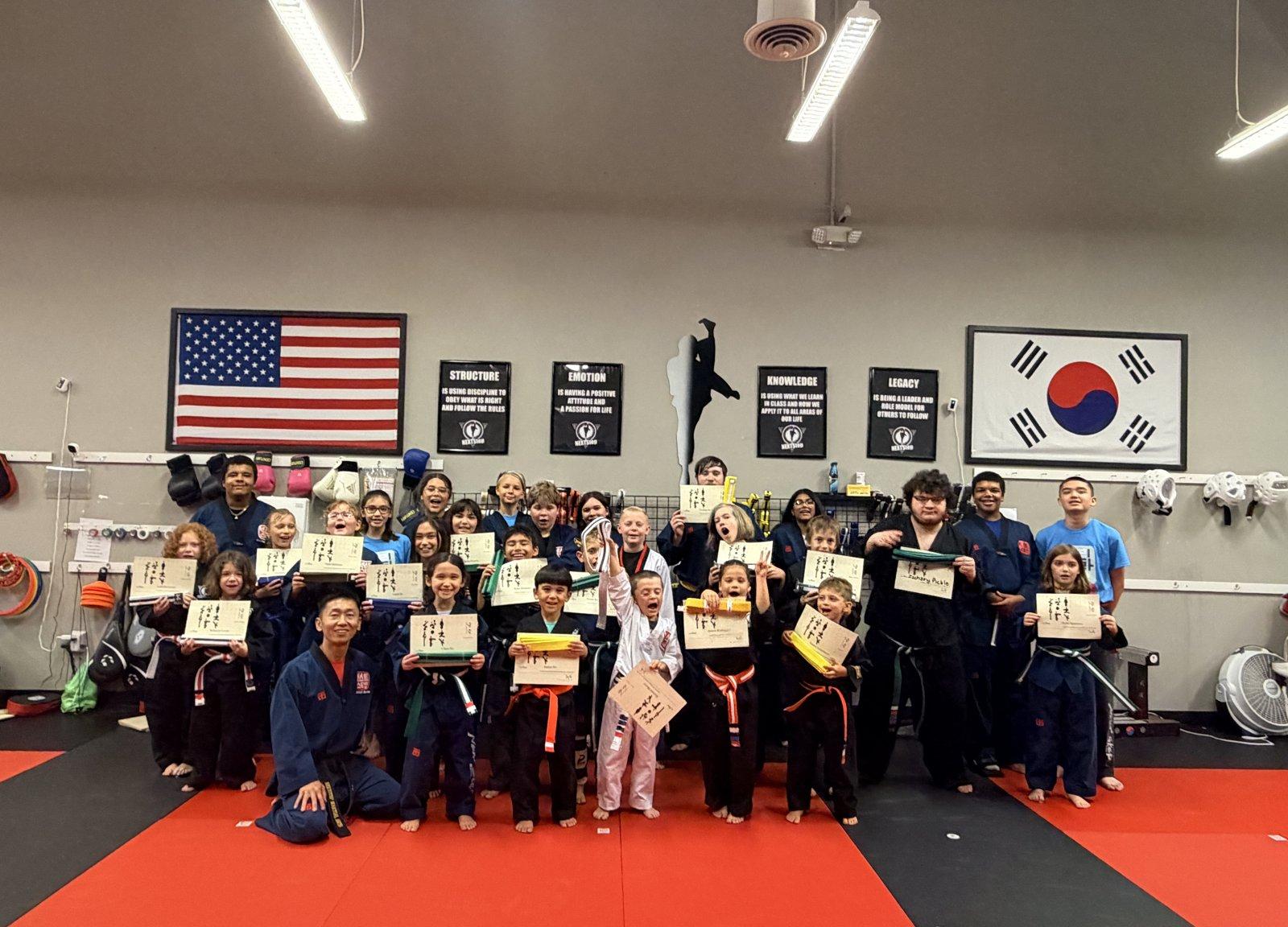
We want students to walk out of the dojang thinking, “I have more to learn, and I am proud that I am learning it.” That is a much stronger message than “I am only valuable when I perform perfectly.”
The belt is a symbol of progress. It is not the whole story.
What We Really Want Them to See
Years from now, your child may not remember any particular front kick, or which class came with which correction. But we hope they remember the feeling of working through something that once seemed difficult.
We hope they can look in the mirror and recognize someone who kept going. Someone who learned to accept feedback. Someone who could take a small win and say, “I am proud of myself because I have achieved more than I thought I could.”
That is the kind of pride we are building at NEXTStep Martial Arts.
So tonight, when your child comes home talking about a kick, a belt, or a hard class, try one more question: “What are you proud of?” Then give them time to answer. Help them notice the work behind the result. At the end of the day, that is where the real belt lives.
See It In Action
Everything we write about, we practice daily. Come see the difference in person with a free intro class.
Schedule Your Free Intro ClassNo obligation, just opportunity
